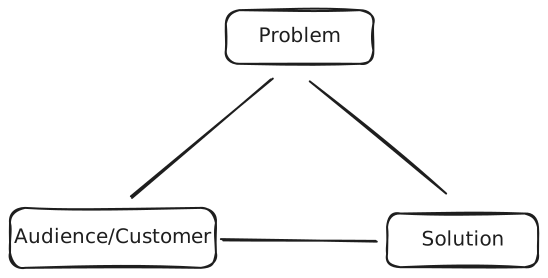
Product sits at the intersection of Problem, Solution, and Audience. When any one of these three elements shifts, the product changes: a different problem, solution, or audience produces a different product.
Successful products clearly define the problem they solve, the solution they deliver, and the people who benefit. That balance guides prioritization, design decisions, and the metrics we use to judge success.
But how does product management ensure this balance is maintained? Product management has become more prevalent over the past few decades as technology increased the pace of iteration. When delivery was slower, people from different functions could coordinate via meetings. Today, a dedicated function that aligns strategy, roadmap, and trade-offs helps teams move faster and stay focused.